
The finite element method did not appear overnight. It grew from the practical needs of aerospace, mechanical and civil engineering, and from the work of a handful of pioneers on both sides of the Atlantic. This Book Byte follows the main milestones, from the first discretization ideas of the 1940s to the commercial FEA software and the verification standards engineers use today.
How it started
No exact date
The exact date of the emergence of the finite element method is difficult, if not impossible, to determine. Its origins can be traced to the need to solve practical problems in aerospace, mechanical and civil engineering.
The discretization (early 1940s)
Use of the finite element method began in the early 1940s, with the work of the Russian-Canadian structural engineer Alexander Hrennikoff and the German-American mathematician Richard Courant.
Although very different, the work of these two men shared a common characteristic: the discretization of a continuous domain into several elements.
The pioneers: independent actors
The finite element method was developed in parallel in Europe and North America by a number of independent actors:
- Ray Clough and colleagues, UC Berkeley (California, USA)
- John Argyris and colleagues, University of Stuttgart (Germany)
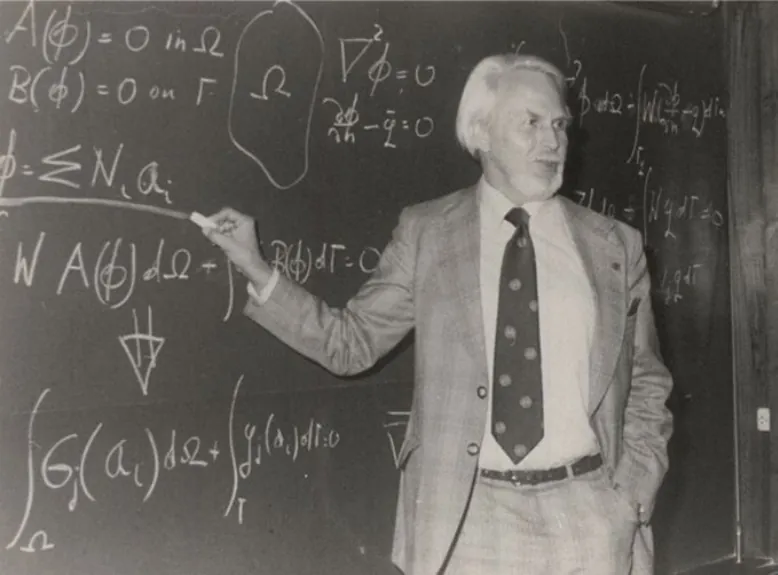
- Olgierd Zienkiewicz and colleagues, University of Swansea (UK)
- Bruce Irons and colleagues, University of Swansea (UK)
- Richard Gallagher and colleagues, Cornell University (USA)

Engineering matters: a popular domain
The finite element method (FEM) and finite element analysis (FEA) have been generalized to a wide variety of engineering disciplines, such as structural analysis, electromagnetism, heat transfer and fluid dynamics, for the numerical modeling of physical systems.
FEA is very popular in universities thanks to its wide range of applications. Consequently, the number of papers published on the subject has increased exponentially.
| Year | 1956 | 1961 | 1966 | 1971 | 1976 | 1986 | Today |
|---|---|---|---|---|---|---|---|
| Papers about FEM | 1 | 10 | 134 | 844 | 7,000 | 20,000 | > 100,000 |
The timeline
Early 1940s: Alexander Hrennikoff and Richard Courant
Alexander Hrennikoff and Richard Courant establish the mathematical foundations of the present form of the finite element method for solving elasticity and structural analysis problems in civil and aeronautical engineering.
1941 to 1943: Alexander Hrennikoff
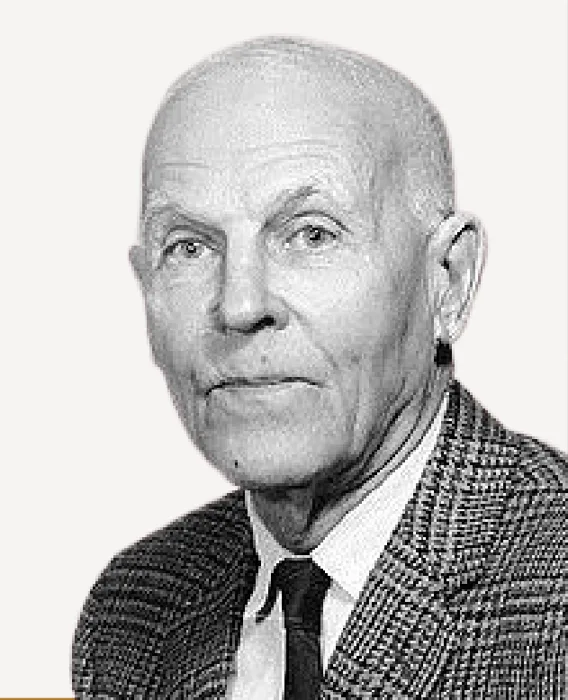
Hrennikoff presents the discretization of a continuous domain into several elements, using the lattice analogy to model membrane and plate bending parts of a structure. However, this analogy could not be applied to nonrectangular areas.
1943: Richard Courant
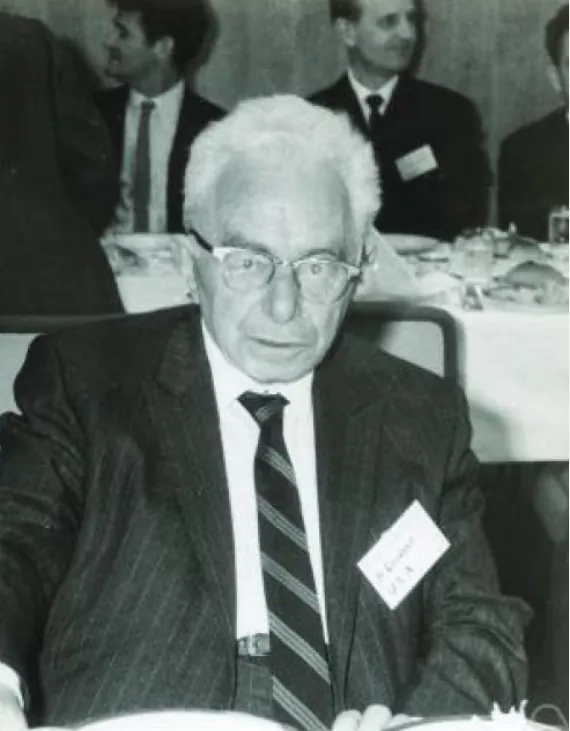
Richard Courant presents his approach based on constant strain triangular elements using the Ritz method. This approach was not pursued at the time because high-speed computers did not exist.
1952 to 1953: Ray Clough and John Turner
Ray Clough worked with John Turner at the Boeing Structural Dynamics Unit on the calculation of bending and torsional flexibility influence coefficients for low aspect ratio wings. Static experimental results had been obtained for a swept-back box wing structure, but they did not agree with the results of a structural model using the lattice analogy. They conceived the procedure for the development of the constant strain triangle.
Their work was presented at Boeing in 1954, and a paper was published in 1956.
1954 to 1955: John Argyris
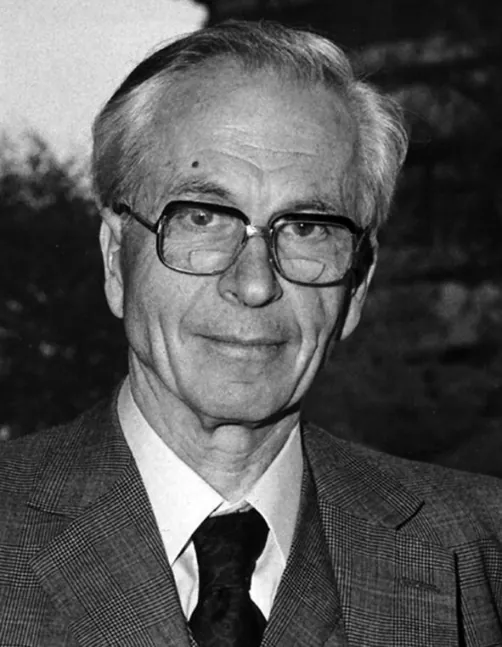
John Argyris, from the University of Stuttgart, unified many different approximate methods for the solution of both continuous and one-dimensional frame structures. Using matrix transformation methods, he clearly showed that most structural analysis methods could be categorized as either a force method or a displacement method.
1956: one of the first finite element articles
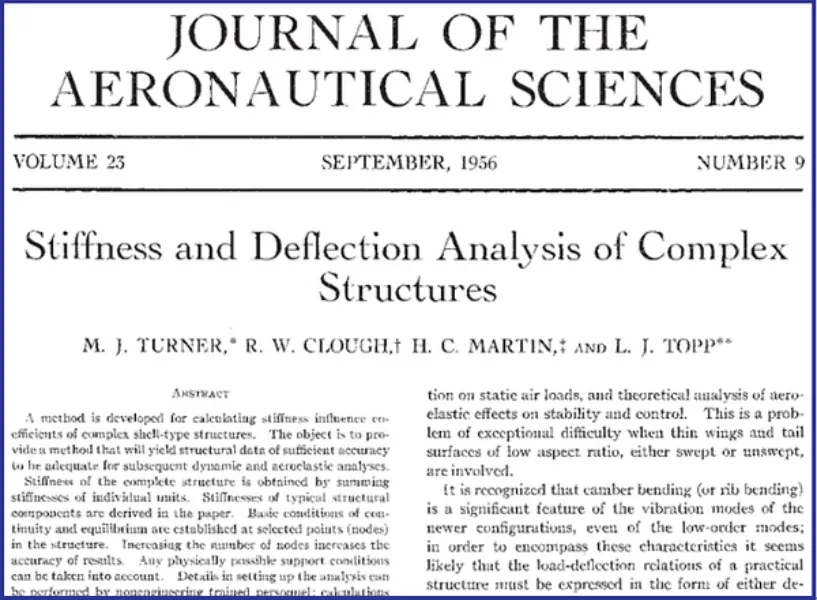
"Stiffness and Deflection Analysis of Complex Structures" by M. J. Turner, R. W. Clough, H. C. Martin and L. J. Topp, published in the Journal of the Aeronautical Sciences in September 1956, is one of the first articles on the application of the finite element method.
1957 to 1960: the IBM 701 computer
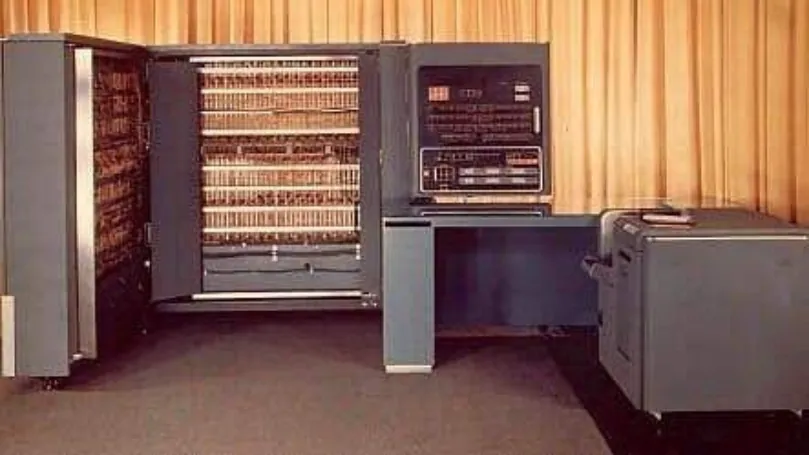
Clough initiated a new structural analysis research program at UC Berkeley and started a new graduate course entitled Matrix Analysis of Structures. An IBM 701 digital computer, with 4k of 16-bit memory, was installed in the College of Engineering.
1958: Ed Wilson
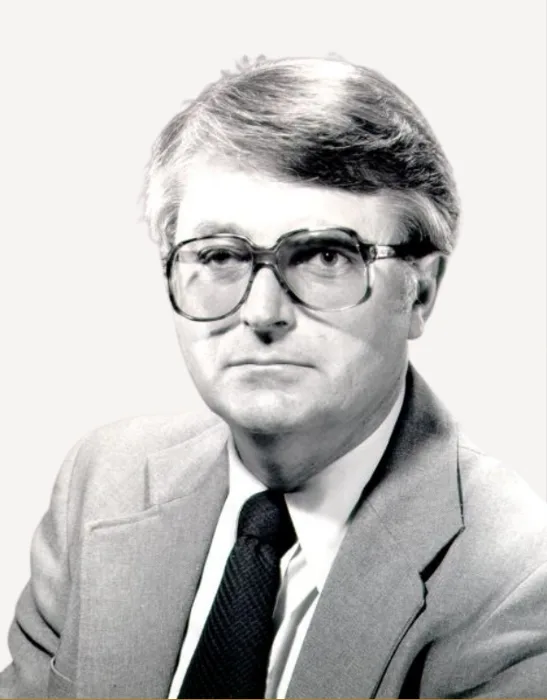
Ed Wilson, a graduate student who shared an office with Adini at UC Berkeley, was not satisfied with the large amount of work required to solve finite element problems with the matrix algebra program. Under the direction of Clough, he started the development of an automated finite element program based on the rectangular plane stress finite element developed at Boeing.
1957 to 1960: the IBM 704 computer
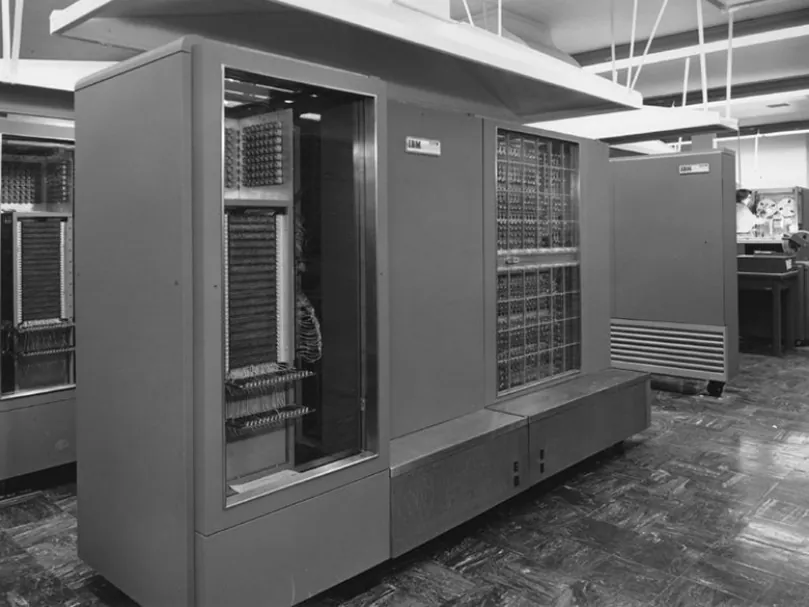
The IBM 704 computer is deployed at UC Berkeley. It had 32K of 32-bit memory and a floating-point arithmetic unit approximately 100 times faster than the IBM 701. Under the direction of Clough, Wilson wrote a two-dimensional frame analysis program with a nonlinear moment-curvature relationship defined by the classical Ramberg-Osgood equation.
1960: Ray Clough coins the term "finite element method"
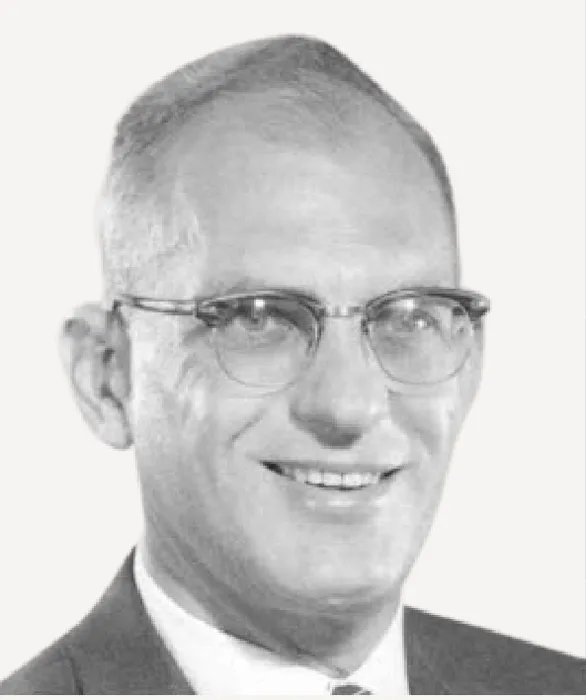
Ray Clough coins the term "finite element method" in his paper "The Finite Element Method in Plane Stress Analysis", presented at the 2nd American Society of Civil Engineers (ASCE) Conference on Electronic Computation, Pittsburgh, September 1960.
1960: Wilson and Clough
Clough and Wilson developed a fully automated finite element program in which the basic input was the location of the nodes and the node numbers where the triangular plane stress elements were attached. Structural engineers without a strong mathematical background in continuum mechanics could then solve practical plane stress structures of arbitrary geometry made of several different materials.
1960: UC Berkeley, a knowledge center
Many different research activities are pursued at UC Berkeley. FEA is the analysis tool that complements all these analytical and experimental research activities and contributes to the development of the finite element method.
1964 to 1965: Dr. Olgierd Zienkiewicz
Dr. Olgierd Zienkiewicz, professor at the University of Wales in Swansea (UK), invited Clough and many other leading specialists in new methods of analysis to take part in a conference on stress analysis at the university. These lectures were compiled in a book entitled "Stress Analysis".
1965: NASA structural analysis application
NASA issues a request for proposal for the development of structural analysis software. The result is the NAsa STRuctural ANalysis application (NASTRAN), which implements the available FEA technology to solve structural problems.
1965: a new name
The terminology "finite element method" was accepted as the replacement for the "direct stiffness method".
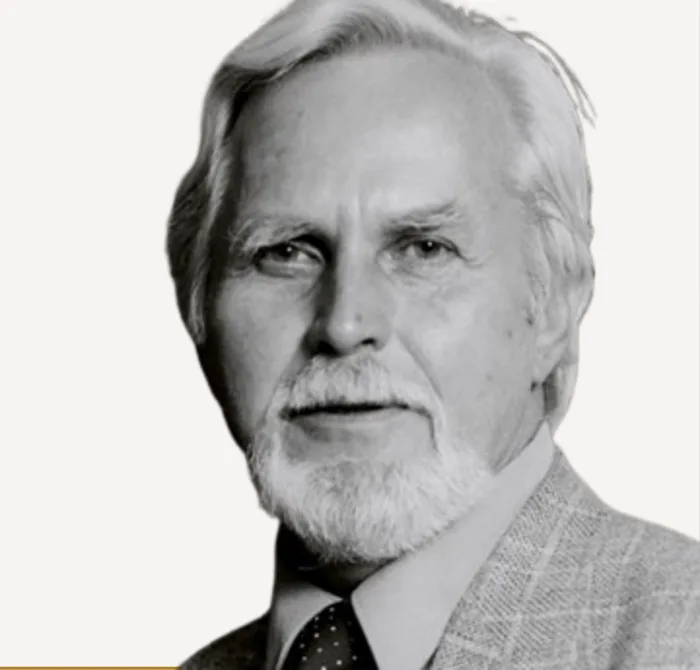
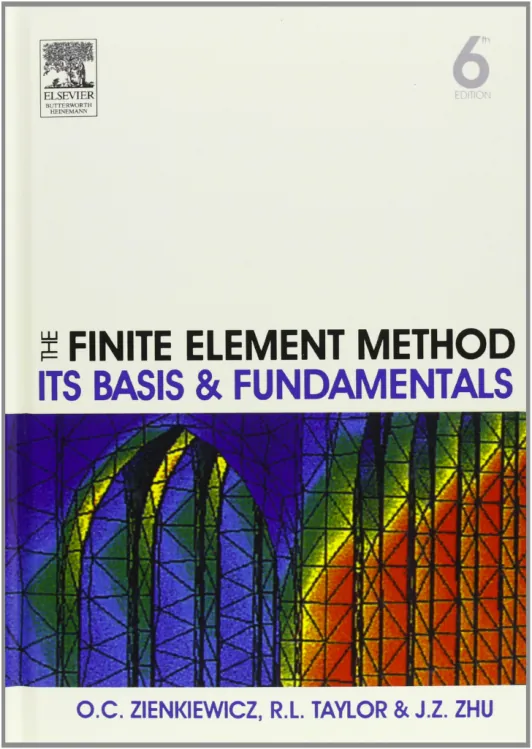
1967: Olgierd Zienkiewicz publishes the reference book
The book "The Finite Element Method" is published by Olgierd Zienkiewicz (later editions with Robert Taylor and Jianzhong Zhu). It remains, to this day, the standard reference text on the theoretical basis of the method.
1968: Computer Sciences Corporation
Computer Sciences Corporation (CSC) delivers the FEA program NASTRAN (NAsa STRuctural ANalysis) to NASA.
1969: the first generation of FEA software
MacNeal-Schwendler Corporation (founded in 1963 by Dr. Richard H. MacNeal and Robert Schwendler) releases the first commercially available version of NASTRAN, named MSC/NASTRAN, which became known as the first generation of FEA software.
1970: ANSYS
John Swanson releases the first version of his ANalysis SYStems (ANSYS) FEA software.
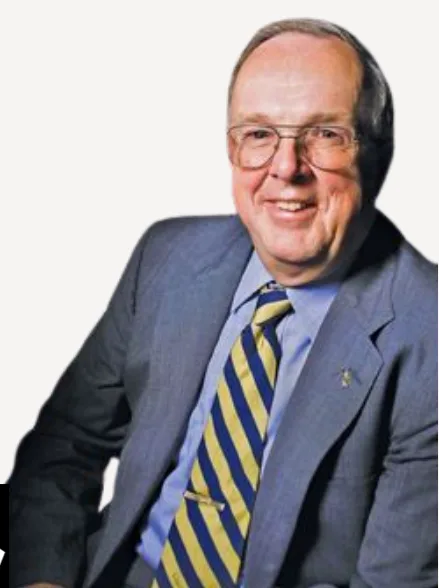
1978: ABAQUS
Hibbitt, Karlsson and Sorensen release the first version of the FEA software ABAQUS.
1990s: FEA reaches small and medium-sized companies
Low-cost, powerful personal computer (PC) workstations emerge, and FEA is adopted by small and medium-sized industries.
2006: ASME verification and validation guide
The American Society of Mechanical Engineers (ASME) releases the Guide for Verification and Validation in Computational Solid Mechanics. This groundbreaking guide lays the foundation of requirements for controlling errors in numerical simulations.
2008: NASA technical standard
NASA releases the "Standard for Models and Simulations", NASA-STD-7009. Any FEA simulation must pass strict verification requirements to be deemed compliant.
Fast forward to today
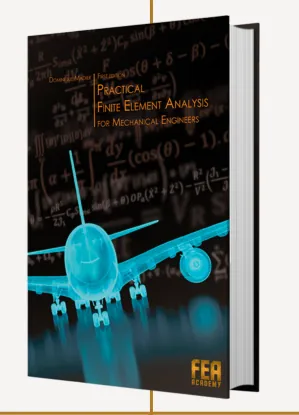
Today, the practical side of FEA, how to build accurate and reliable finite element models, is the subject of my book Practical Finite Element Analysis for Mechanical Engineers.
Go further
This Book Byte is taken from Chapter 4 of Practical Finite Element Analysis for Mechanical Engineers by Dominique Madier. The topic is covered in depth, with worked examples, in the on-demand course Practical Basic FEA.
See the Practical Basic FEA course Take the free FEA diagnostic